

Why Your Home Feels Unfinished (And How to Fix It)
The psychology behind it, and practical fixes for Nigerian homes.
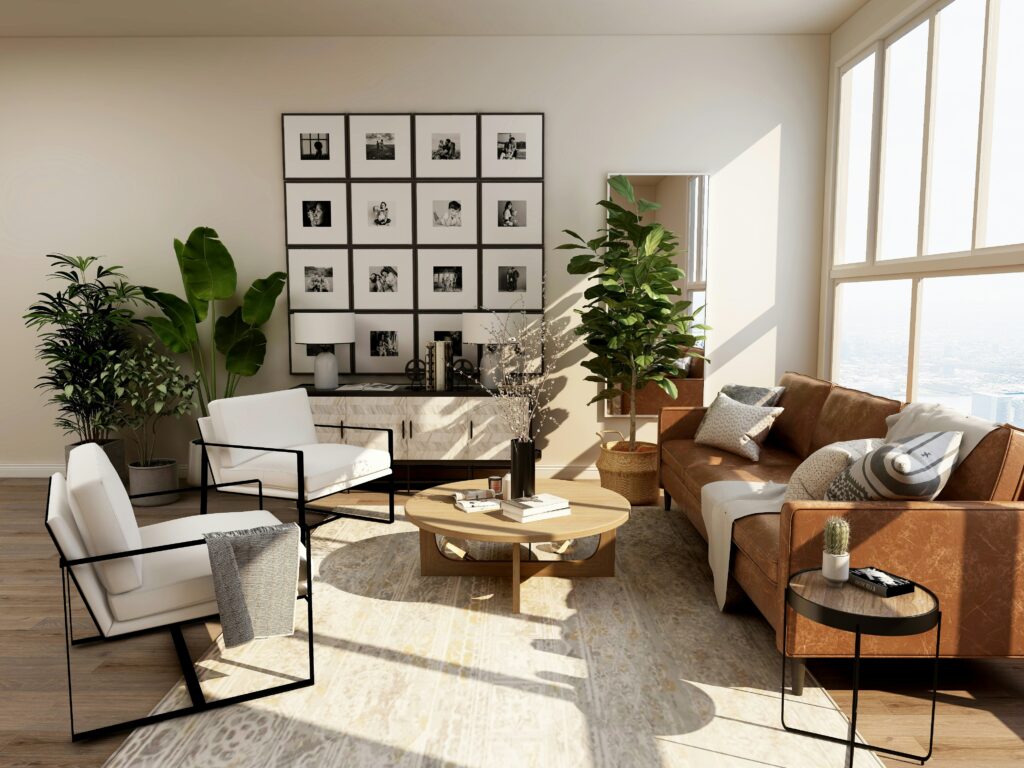
You bought the sofa. You hung the curtains. You even invested in that statement rug everyone on Instagram seems to have. Yet something about the room still feels off. It is not messy, exactly. It is not empty, exactly. It just does not feel finished.
If this sounds familiar, you are not alone, and you are not imagining it. The feeling that a home is unfinished is not vague. It is a measurable response in your brain and body, and it follows specific, well documented patterns. Once you understand those patterns, you can fix them, often without spending a kobo more than you already planned to.
At Joanswood Creation, we often see clients who have spent significant money on furniture and still feel like something is missing. This article walks through the science of why that happens, what it means specifically for Nigerian homes, and what you can do about it today.
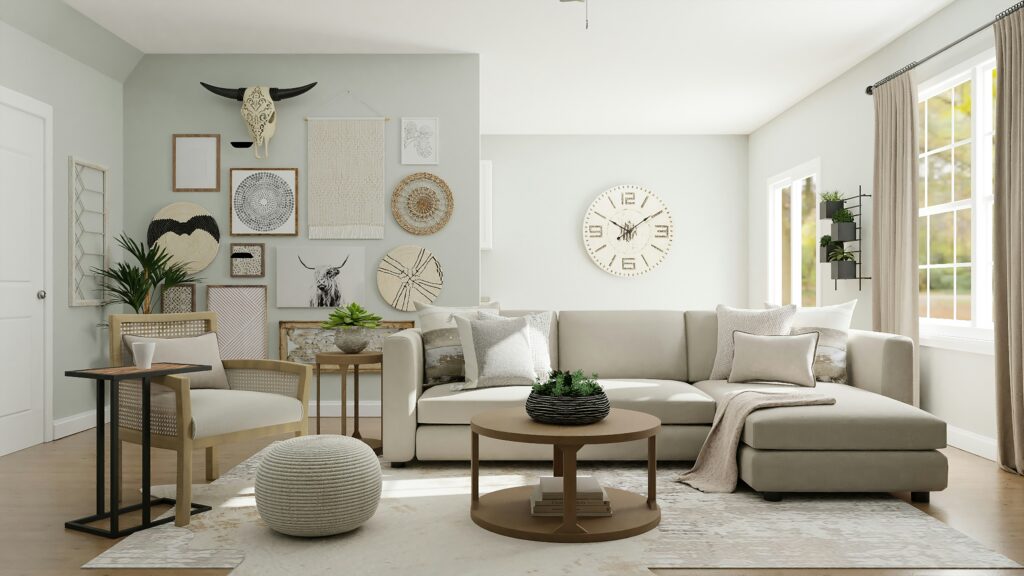
What Does It Mean for a Home to Feel "Complete"?
The experience of residential completeness—the subjective sensation that a home is cohesive, finished, and emotionally supportive is not merely an aesthetic judgment, but a neurobiological reality. At Joanswood Creation, we define a “complete” home as one that supports your nervous system, reduces cognitive load, and enhances your daily restorative processes. When a home is poorly structured or physically unfinished, it creates a “stressful home score” that can impact your endocrine health.
The landmark study by Saxbe and Repetti analyzed dual-income families and found that women living in homes with high “stressful home scores” exhibited flattened diurnal salivary cortisol slopes, indicating a failure of the body’s natural physiological recovery mechanism.
Chronically cluttered or unfinished environments trigger the Zeigarnik effect, where the brain remains preoccupied with incomplete tasks. This visual noise consumes working memory and elevates decision fatigue.
Completeness is not about excessive decoration; it is about functional alignment. By prioritizing human-centric clearance metrics and intentional design, homeowners can minimize cortisol spikes and foster a space that truly restores energy.
The Joanswood Creation Commitment
We don't just furnish spaces; we complete them. Discover how our custom furniture solutions are engineered to bring spatial harmony to your home.
Why Does an Unfinished Home Affect Your Body and Mind?
An unfinished home affects your body and mind because every visible incomplete detail acts as an unresolved task that your brain refuses to stop monitoring. This is known as the Zeigarnik effect, the cognitive tendency to stay preoccupied with anything left undone. An exposed cable, a bare wall, or an unfinished corner: each one is a small, open loop. Collectively, they consume working memory and raise decision fatigue. The opposite effect comes from Attention Restoration Theory.
Unfinished details act as ‘open loops’ in your cognitive processing, causing your brain to remain constantly alert to the incompletion.
Humans have an evolutionary preference for natural, open environments. When Joanswood Creation includes natural materials like wood, stone, and indoor plants, the home becomes a restorative environment that lowers cognitive fatigue.
Over time, a home that consistently triggers unresolved attention weakens ‘place attachment,’ the emotional bond that transforms a structure into an actual home.
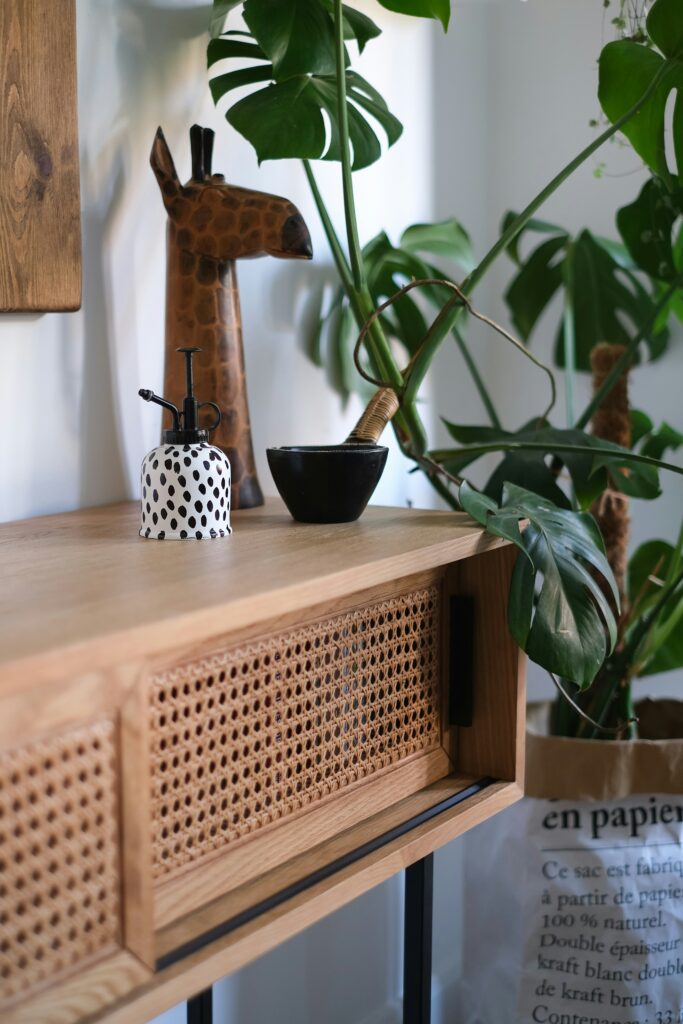
What Are the Gestalt Principles of Interior Design?
The Gestalt principles are a set of visual perception rules, first developed by psychologists Kurt Koffka, Wolfgang Kohler, and Max Wertheimer, that describe how the brain naturally organizes scattered visual information into unified wholes. In interior design, they explain exactly why some rooms feel cohesive and others feel scattered, even when the individual furniture pieces are beautiful on their own. At Joanswood Creation, we utilize these principles to ensure every piece of custom furniture we create contributes to a unified, harmonious whole.
- Objects placed close together are read by the brain as one group. A sofa, an armchair, and a coffee table placed together on a single rug become a single conversation zone. Spread the same pieces too far apart, and the brain sees disconnected, floating objects instead.
The eye groups elements that share a visual trait, such as color, shape, or material finish. Repeating one finish, such as a brass tone, across light fixtures, cabinet hardware, and furniture legs, quietly tells the brain that everything belongs to one coherent space.
The brain prefers to follow smooth, unbroken lines rather than abrupt changes. Aligning shelving, console edges, and clear sightlines toward a window or piece of art reduces what researchers describe as spatial anxiety and makes a room easier to navigate.
“The brain will mentally complete a shape even when the physical boundary is incomplete. Four armchairs arranged to face one another, for instance, create the sense of an enclosed, contained zone without a single wall being built.
This describes the relationship between the focal object (figure) and the space around it (ground). Overcrowd a room and there is no ground left, only competing figures. Leave a large room with only one small object and the ground feels cold and unfinished. Balance between the two is what makes a room feel resolved
Why Does Furniture Placement Affect How a Room Actually Feels?
Furniture placement affects how a room feels because the human body has fixed, measurable space requirements for moving and sitting comfortably. Breaking those requirements creates friction your body registers even when your eyes do not consciously notice it. At Joanswood Creation, we emphasize that interior architects rely on specific clearance measurements to plan layouts that feel effortless rather than cramped.
Clearance Guidelines
Primary Walkways (hallways or entryways): 90 to 100 cm. This lets an adult walk through without turning sideways.
Secondary Pathways (around a sofa): 60 to 75 cm. This allows comfortable single-person movement near furniture.
Dining Chair Pull-out: 90 cm behind the chair. This lets a guest pull the chair back safely.
Conversational Span: 2.1 to 3.0 meters. This prevents vocal strain and confrontational closeness.
The Visual Difference
When you look at a room with furniture pushed flat against the walls, it often feels disconnected. By pulling that same furniture 30 to 40 centimeters off the wall, you create a clear walkway and a better flow that instantly makes the space feel more intentional.
The Perimeter Ring Trap
One of the most common layout mistakes is pushing every major piece of furniture flat against the walls to open up the room. This actually backfires, creating an awkward void in the center. The fix is simple: pulling the sofa and chairs even 30 to 40 centimeters off the wall draws the furniture into one connected group. Furniture pulled tightly against the walls does not make a room feel bigger; it creates a dead zone. Floating furniture even slightly off the wall restores flow and cohesion, which is a hallmark of our design philosophy at Joanswood Creation.
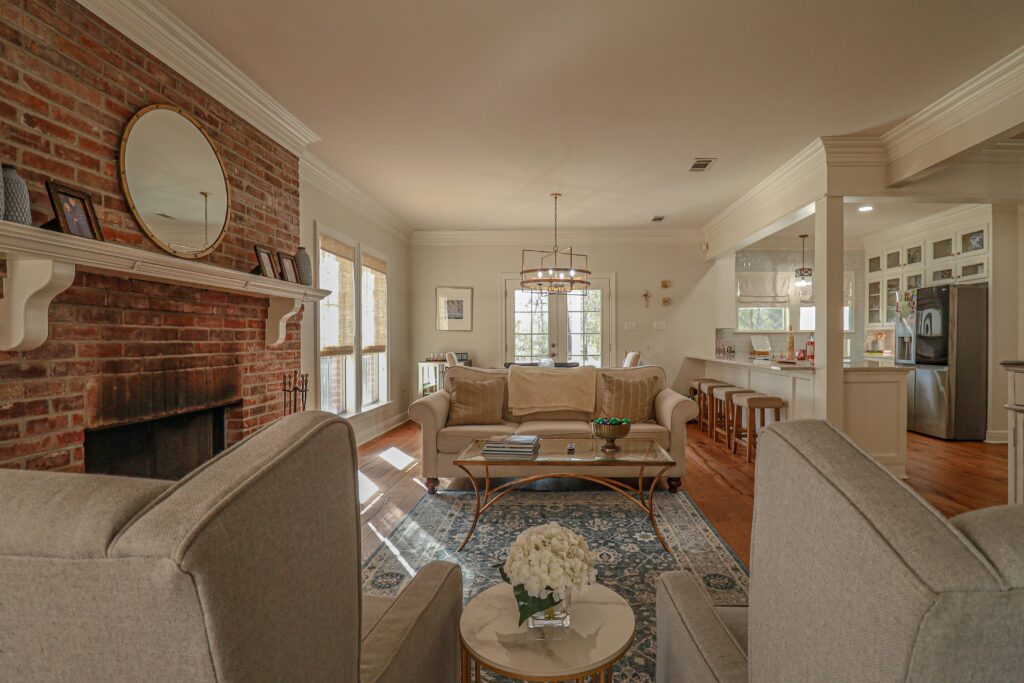
Why Is Lighting the Layer Most Nigerian Homes Get Wrong?
Lighting is the layer most homes get wrong because most rooms rely on a single overhead fixture, when a genuinely finished room requires three distinct layers working together. At Joanswood Creation, we emphasize that successful interior design relies on a harmonic balance of ambient, task, and accent lighting.
Ambient Lighting
The baseline illumination, such as natural daylight or a central fixture, which establishes general visibility and a feeling of safety.
Task Lighting
Focused, higher intensity light aimed at specific activities, such as a reading lamp, preventing eye strain during demanding work.
Accent Lighting
A stylistic layer, usually a directional spotlight or wall sconce, used to highlight artwork or textured walls, creating 'shape from shading' cues.
The Science of Light
1. Spatial Perception: A study from Chalmers University of Technology found that the way light is distributed, rather than the quantity, affects perceived room size. Illuminating walls draws the eye outward, expanding width and depth, whereas dark boundaries contract the space.
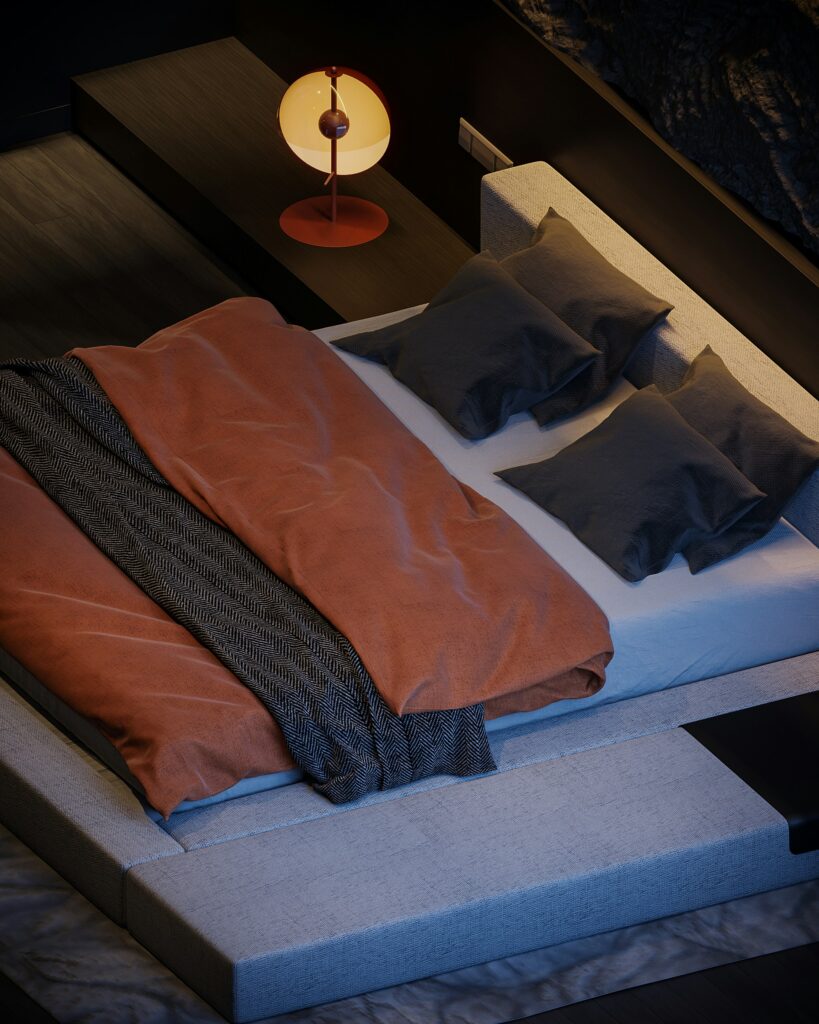
2. Color Temperature: Cool blue-white light (5000K-6500K) suppresses melatonin, supporting daytime alertness. Warm light (2700K-3000K) mimics sunset, signaling the body to wind down. Bedroom sleepers with warm, neutral lighting averaged 7 hours and 52 minutes of sleep, versus 5 hours and 56 minutes for those in cool-toned bedrooms.
3. Circadian Biology: A joint research project by the ASID and Cornell University compared workspaces with integrated circadian lighting against poorly lit environments. The results showed a 63% improvement in lighting quality and 25% of occupants reported genuinely improved sleep. Joanswood Creation integrates these lighting principles into our custom furniture and interior design projects to ensure your home supports your biological well-being.
What Makes a Nigerian Home Different From a Western Open Plan Home?
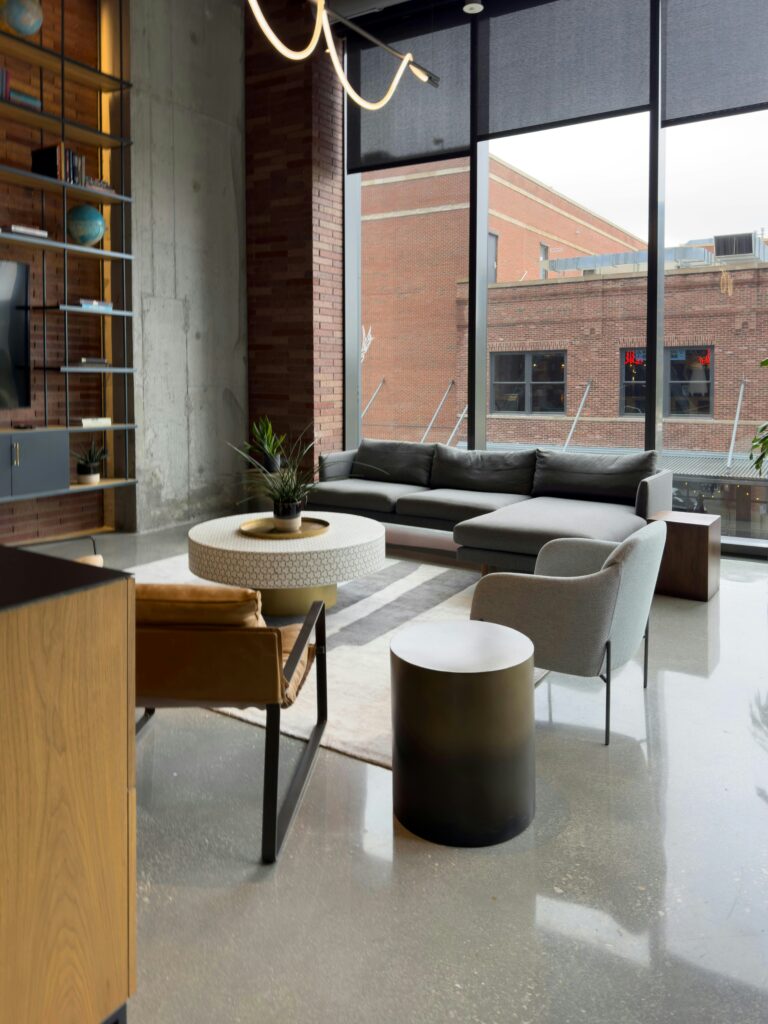
A Nigerian home is different because it is built around hospitality and multi-generational living rather than open, fluid space. At Joanswood Creation, we recognize that furniture and layout decisions that work in a Western open-plan home often fail completely in a Lagos duplex or apartment. Traditional and contemporary Nigerian homes require a clear division of formal and informal space. Many homes also require a ground-floor en-suite guest room for visiting elderly parents or relatives who should not have to climb stairs, plus generous entry foyers sized for shoe storage and separate quarters for domestic staff.
- Parlour: Formal reception area near the entrance to reflect household hospitality.
- Family Lounge: A private zone positioned deeper in the home or upstairs for daily living.
- Guest Room: Ground-floor accessibility for elderly relatives and visitors.
- Climate: Utilization of passive cooling and stack effects to manage tropical heat.
- Plot Size: Compact developments of 300 to 450 square meters.
- Ventilation: Critical optimization for cross-ventilation to prevent heat/humidity trapping.
Key Takeaway
Nigerian homes are not smaller versions of Western homes. They are built around hospitality and climate management. Shop Scale-Appropriate Furniture at Joanswood Creation, matched to the unique needs of your home
What Are the Most Common Design Mistakes That Make a Home Feel Unfinished?
The most common mistakes that make a home feel unfinished are an undersized rug, curtains hung too low and too short, furniture pushed entirely against the walls, a missing or competing focal point, and visible cable or surface clutter. At Joanswood Creation, we believe each one is simple to fix once you know what to look for.
The Mistakes
The mistake: A small rug that floats under only the coffee table. Why it happens: It fails at its actual job, which is to anchor the furniture group together. The fix: Choose a rug large enough that the front legs of every major seating piece rest on it. This single change visually unifies the entire seating area.
The mistake: Mounting a curtain rod just above the window frame, with fabric that stops short of the floor. Why it happens: It visually compresses the height of the entire room. The fix: Mount the rod as close to the ceiling as possible, let the fabric fully reach the floor, and extend the rod 20 to 30 centimeters beyond the window frame on each side so the open curtains do not block light or airflow.
The mistake: Pushing every piece of furniture against the wall to “free up” the center. Why it happens: It creates a cold, disconnected void rather than a spacious feeling room. The fix: As emphasized by Joanswood Creation, pulling furniture even slightly off the wall creates a walkway behind the seating, drawing the furniture into one connected group.
he mistake: A room with no clear anchor or multiple competing focal points. Why it happens: A room with no anchor leaves the eye with nowhere to rest; multiple anchors create visual conflict. The fix: Choose one dominant anchor, such as a custom media unit or a textured feature wall, and arrange seating to address it directly.
The mistake: Tangled cords and uncovered daily clutter. Why it happens: It is a textbook trigger for the Zeigarnik effect, which keeps the brain preoccupied with unfinished tasks. The fix: Prioritize integrated storage and proper cable management solutions from Joanswood Creation, rather than just adding more shelving for items to pile on
How Can You Fix an Unfinished Home Without a Full Renovation?
You can fix an unfinished home without a full renovation by using sensory, behavioral, and furniture-based strategies that do not require structural changes, paint, or major capital investment.
- 1. Scent: Use scent intentionally; calming aromas like lavender or citrus in high-stress zones can lower baseline anxiety and make visual imperfections feel less urgent.
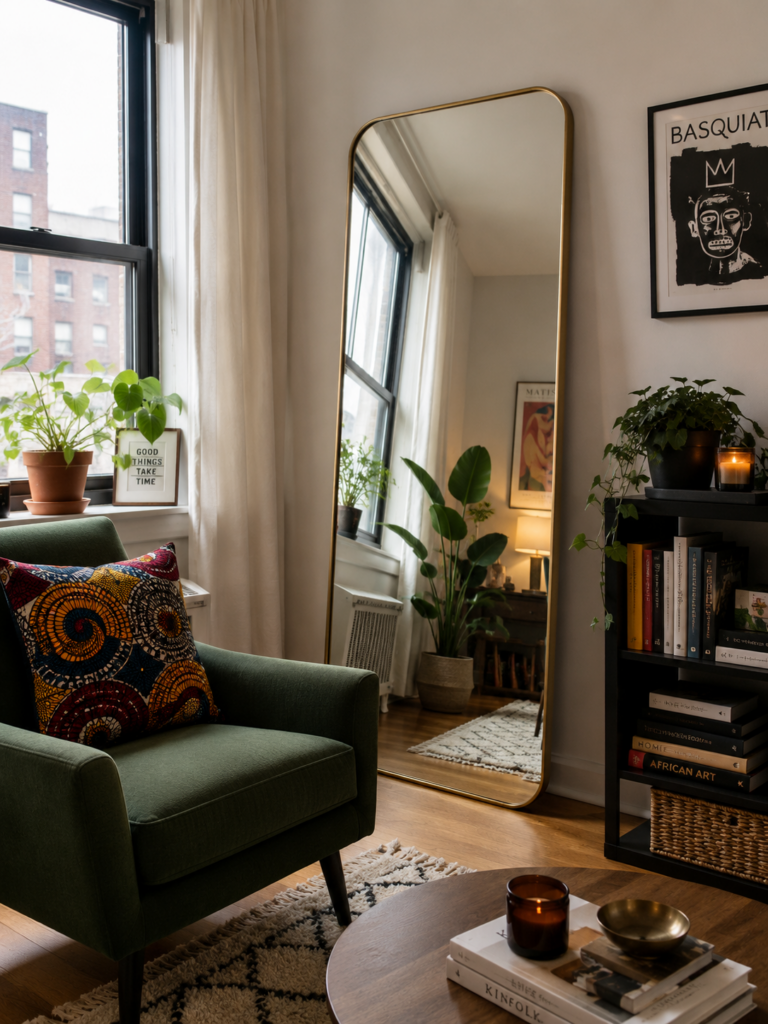
- 2. Mirrors: Place a large, floor-length mirror across from a window to double perceived space and bounce daylight into dark corners, a vital trick for compact Lagos apartments.
- 3. Light Dividers: Use open bookshelves or lightweight rattan screens to create zones (like home offices) without structural walls.
- 4. Swatch Testing: Test paint or fabric swatches directly on the wall under your home's actual lighting before committing to bulk purchases.
- 5. Local Custom Furniture: Joanswood Creation specializes in furniture built to your room's exact dimensions, sidestepping scale mismatch issues. One can also use durable materials like teak, mahogany, and seasoned iroko, or adding cultural texture with Ankara, Aso Oke, or Adire accents, which builds a stronger emotional attachment to your space.
Three behavioral rules consistently prevent clutter from rebuilding:
The OHIO rule (Only Handle It Once): decide immediately where an item goes the moment it enters the home, rather than setting it down “for now.”
The one shelf method: tackle a single shelf or drawer for seven to ten minutes a day instead of attempting a full weekend overhaul.
The one in, one out rule: for every new item brought home, one existing item leaves, keeping total volume stable over time.
How Does Joanswood Creation Apply This Research to Furniture Design?
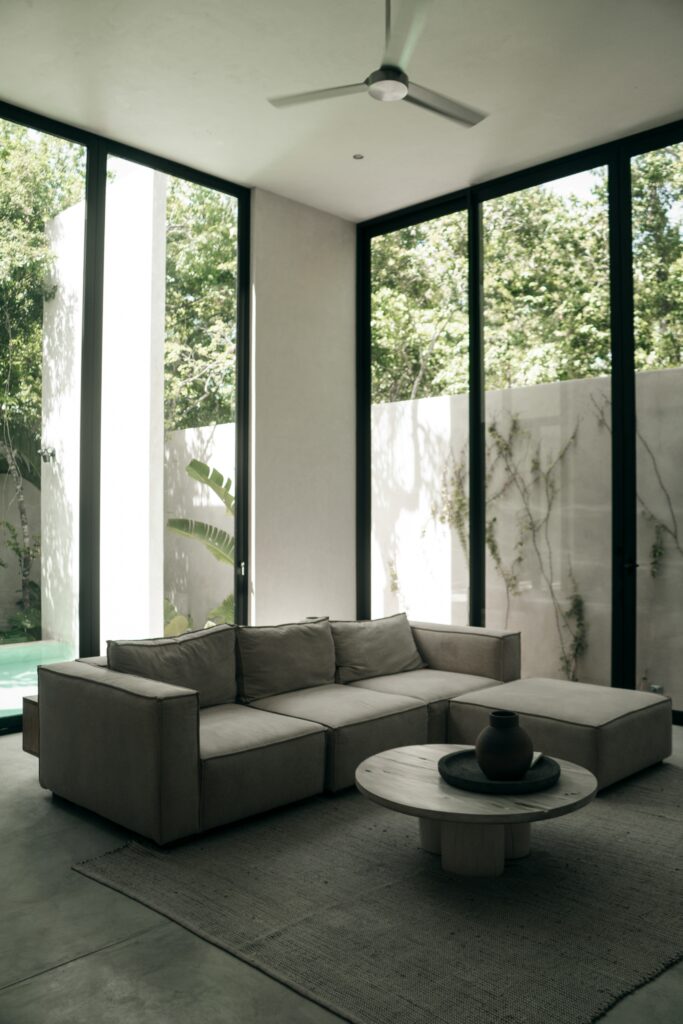
Joanswood Creation applies this research by designing furniture to the actual scale of Nigerian homes rather than adapting imported, mass-produced pieces built for entirely different floor plans. Most furniture sold into the Nigerian market is not designed with our plot sizes, our climate, or our cultural layout needs in mind. Our approach to custom furniture solutions starts from the room itself: using shallower sofa depths (85–90 cm) and modular, L-shaped sectional layouts that maximize seating while preserving necessary circulation clearances.
Quick Summary: How to Make Your Home Feel Complete
A home feels unfinished when it triggers ongoing, low-level stress through clutter and poor spatial order, and feels complete when it supports genuine physiological recovery instead.
- Gestalt Principles: Group furniture intentionally using proximity, similarity, continuity, closure, and figure-ground balance.
- Respect Clearance: Maintain 90–100 cm for main walkways and 60–75 cm for secondary paths; avoid pushing all furniture against the walls.
- Layered Lighting: Combine ambient, task, and accent lighting, and use warm light tones in bedrooms after dark to support sleep.
- Nigerian Context: Account for local needs: the parlour/lounge division, ground-floor guest suites, climate-driven ventilation, and furniture scaled to compact plots.
- Common Mistakes: Fix the big five first: undersized rugs, low curtains, the perimeter furniture ring, lack of focal points, and surface clutter.
- Practical Fixes: Utilize scent anchoring, the mirror trick, and small daily decluttering habits.
- Proportional Scale: Choose furniture built to the actual scale of your room rather than generic, imported sets.
A Note on Intentionality
A home does not need to be expensive to feel complete. It needs to be intentional. Once you understand the psychology behind why a space feels unresolved, fixing it becomes a series of small, specific, achievable decisions rather than one overwhelming project.
Furniture needs to be grouped using principles like proximity; buying more pieces does not fix spacing or grouping problems.
The study of how physical surroundings affect stress and cognitive function; ordered spaces support physiological recovery.
Large enough so the front legs of every major seating piece rest on it.
As close to the ceiling as possible, with fabric reaching the floor.
It creates an isolated “perimeter ring” void in the center; floating furniture connects seating into a cohesive group.
The cognitive tendency to stay preoccupied with unfinished tasks, like cables and clutter, leading to mental fatigue.
Proximity, similarity, continuity, closure, and figure-ground rules for how the brain organizes visual information.
A mix of ambient, task, and accent lighting; use warm 2700K–3000K tones in bedrooms to support sleep.
90–100 cm for main walkways and 60–75 cm for secondary paths.
It is often oversized for compact urban plots, blocking circulation and natural cross-ventilation.
Yes, by using floor-length mirrors, light dividers, and testing swatches in natural light.
It serves as the dedicated formal space for hospitality, allowing the private family lounge to remain separate and functional.