
Premium Furniture Standards: What Quality Really Means
Beyond price tags and surface polish: an insider’s guide to structural integrity, moisture protection, and choosing quality furniture built to last
Imagine investing in a solid dining set or bespoke office workstation, only to watch cabinet doors bow, edge bandings peel, and table legs wobble within eighteen months. For many homeowners, property developers, and business owners, this frustrating scenario is all too common.
The root cause rarely stems from improper daily use. Instead, it comes down to a fundamental mismatch between low-grade materials, temporary hardware, and physical environmental demands. Mass-produced flat-pack furniture relies on low-density composite substrates held together by tension fasteners. When subjected to routine load forces and the relative humidity shifts of West Africa, these temporary assemblies quickly fall apart.
Creating enduring furniture requires a deep understanding of materials science, structural woodwork joinery, equilibrium moisture dynamics, human ergonomics, and long-term care.
In this technical guide, we examine the precise engineering principles, smart maintenance habits, and evaluation criteria that separate temporary flat-pack items from heirloom quality woodwork built to last for generations.
What Defines Premium Furniture vs Mass-Produced Furniture?
Premium custom furniture is defined by high-density materials, engineered structural integrity, and long-term durability designed to last across generations, whereas mass-produced furniture relies on low-grade composite substrates, temporary tension fasteners, and unsealed surface layers that degrade within one to five years.
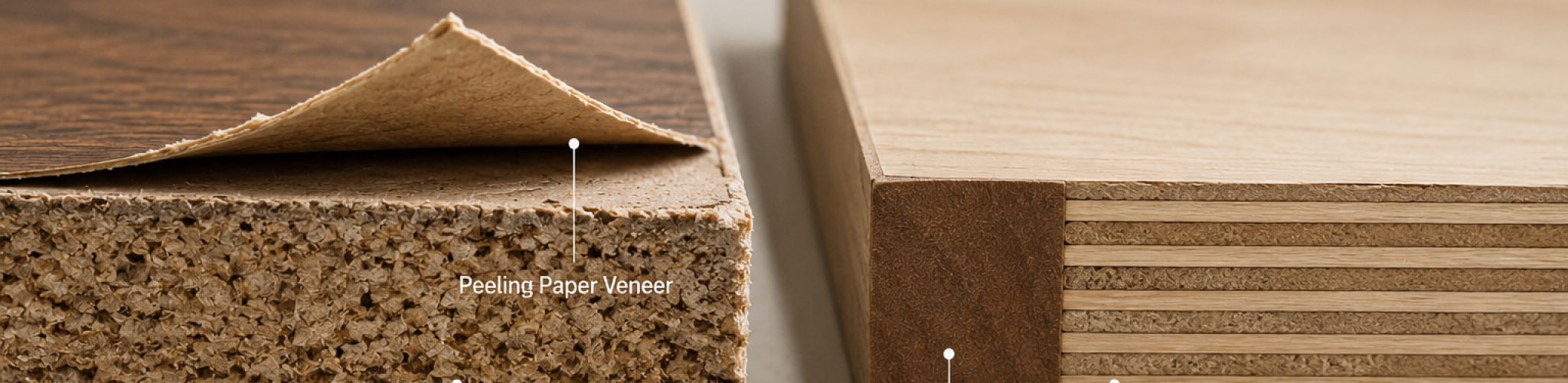
At the core of this distinction is material selection and structural design. Mass-market commercial furniture commonly utilizes low-grade particleboard made from loose wood chips bonded with urea-formaldehyde resin. These boards are typically wrapped in non-breathable vinyl or thin paper veneers.
To minimize manufacturing costs, factories connect these pieces using surface adhesives, plastic dowels, and metal cam locks. When these assemblies experience minor physical shifts or absorb ambient humidity, the core fibers break down, causing structural failure.
In contrast, custom furniture in Lagos utilizes selected kiln-dried solid hardwoods or highly stable, moisture-resistant engineered boards like the ISO certified boards. These structural elements are united through mechanically locked wood joinery and finished with protective chemical barrier coatings.
| Performance Parameter | Mass-Produced Furniture | Premium Custom Furniture |
|---|---|---|
| Primary Substrates | Low-density particleboard, standard MDF | Kiln-dried solid hardwoods, BWP plywood, HDF |
| Assembly Systems | Cam locks, wood screws, plastic dowels, contact cement | Mortise-and-tenon, interlocking dovetails, hardwood dowels |
| Moisture Resistance | Unsealed edges prone to rapid swelling and delamination | Phenolic resin-bonded plywood with meticulously sealed HDF edges |
| Refurbishment Potential | None. Damaged panels usually require complete replacement. | High. Surfaces can be sanded, stained, and refinished multiple times. |
| Average Lifespan | 1 to 5 years under moderate environmental conditions | 25 to 100+ years with proper care |
How Does Structural Joinery Guarantee Long-Term Structural Integrity?
Structural joinery guarantees long-term durability by interlocking wood fibers geometrically to distribute mechanical loads directly through the timber, eliminating sole reliance on adhesives or temporary metal fasteners.
The mechanical execution of a joint dictates how well a piece of furniture withstands daily physical stress. When joints are properly interlocked, mechanical loads flow naturally across the frame without creating concentrated pressure points.
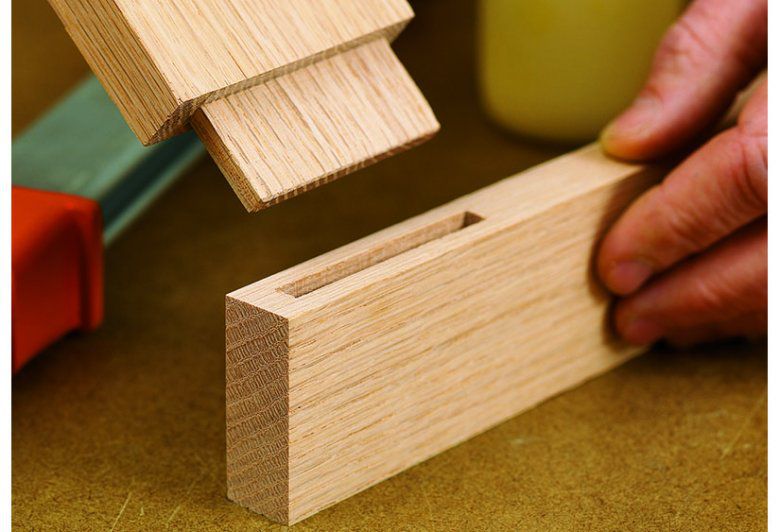
The mortise and tenon joint features a projecting wood tongue (the tenon) inserted snugly into a matching cavity (the mortise). This configuration provides exceptional resistance against rotational torque, lateral racking forces, and heavy vertical loads.
In structural load testing, a well-executed mortise and tenon joint outperforms standard dowel joints by an average of 25% in load capacity. It serves as the industry standard for high-stress connections, including dining chair leg-to-rail joints and table aprons.
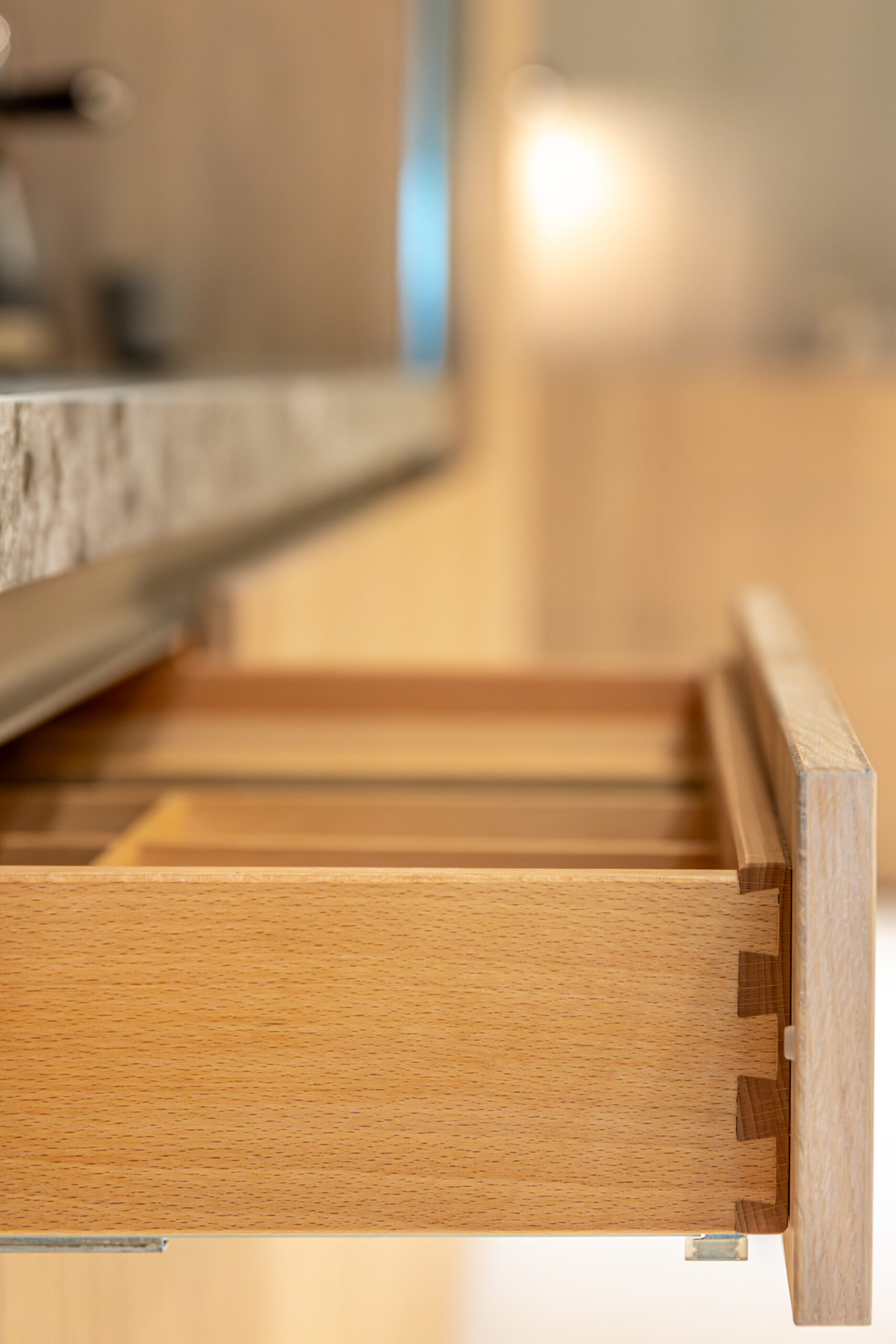
Detailed shot of an open drawer with wooden finish, highlighting the craftsmanship of the furniture.
The dovetail joint uses interlocking, fan-shaped pins and tails to resist direct tensile pull and shear stress. This geometry is essential for drawer construction, where repeatedly pulling the drawer open subjects the joint to continuous horizontal tension.
While mass-produced drawers rely on metal staples or hot-melt glue that pull apart over time, premium cabinetry uses half-blind or through dovetails.
In premium cabinetry, structural precision extends to hardware installation and panel finishes:
- Door Alignment Tolerances: Cabinet doors must maintain uniform perimeter margins within a strict tolerance of ±1.0 mm. This is achieved using heavy-duty, adjustable clip-on cup hinges sourced from recognized global manufacturers like Blum, Hettich, or Grass, engineered to handle thousands of open-close cycles.
- Hot-Pressed Edge Banding: High-gloss acrylic or PET boards require hot-pressed or laser-fused edge banding. Standard cold-applied adhesives soften and peel under typical tropical indoor temperatures of 30°C to 38°C, whereas hot-pressed edges form a seamless, watertight seal.
Which Materials and Engineered Substrates Perform Best in Humid Environments?
The best materials for humid environments are moisture-resistant substrates such as Boiling Water Proof (BWP) plywood, High-Density Fiberboard (HDF), and dense hardwoods like Iroko and Teak that contain natural oils or cell structures that block water absorption.
Selecting raw materials with appropriate density and chemical stability is critical for long-term performance, especially in variable tropical climates.
Color, Textures, and Biophilic Design
Solid hardwoods feature high Janka hardness values, dense cell structures, and natural extractives that prevent biological decay:
Iroko (Milicia excelsa)
Known as "West African Teak," Iroko features dense cell structures containing compound deposits called tyloses. These tyloses block water penetration, making Iroko naturally resistant to rot, termites, and wood-boring insects.
Mahogany (Khaya ivorensis)
Valued for its reddish-brown color, fine grain, and dimensional stability, Mahogany maintains its compressive strength under physical stress with low shrinkage rates.
Teak (Tectona grandis)
Contains natural protective oils that repel water and insects, exhibiting minimal dimensional shrinkage over time.
Mansonia (Mansonia altissima / Ofun)
Features a semi-ring porous structure and lustrous fibers, making it ideal for detailed architectural cabinetry.
Oak (Quercus spp.)
A heavy, dense hardwood with prominent grain patterns, widely used for high-traffic office desks and dining furniture.
Engineered Substrates
Engineered boards deliver uniform strength across large, flat surfaces such as wardrobe doors and wall paneling:
BWP Grade Plywood
Manufactured using phenol-formaldehyde resin glues that do not break down under continuous exposure to moisture or heat. BWP plywood resists delamination, serving as a reliable choice for kitchen carcass construction.
High-Density Fiberboard (HDF)
Formed by compressing wood fibers under high pressure to achieve a density exceeding 800 kg/m 3 (50 lbs/ft 3 ). Its dense core resists moisture absorption and swelling.
Medium-Density Fiberboard (MDF)
Offers a smooth surface with a density of 600 to 800 kg/m 3 , making it ideal for painted surfaces or wood veneers. Unsealed MDF requires proper protective edge sealing to prevent moisture swelling.
Marine Board
Uses specialized melamine glues to maintain structural bond strength in damp environments.
For executive work surfaces and commercial fit-outs, pairing engineered cores with bespoke office solutions guarantees long-term performance under high daily use.
How Does Wood Science and Moisture Dynamics Affect Furniture Lifespan?
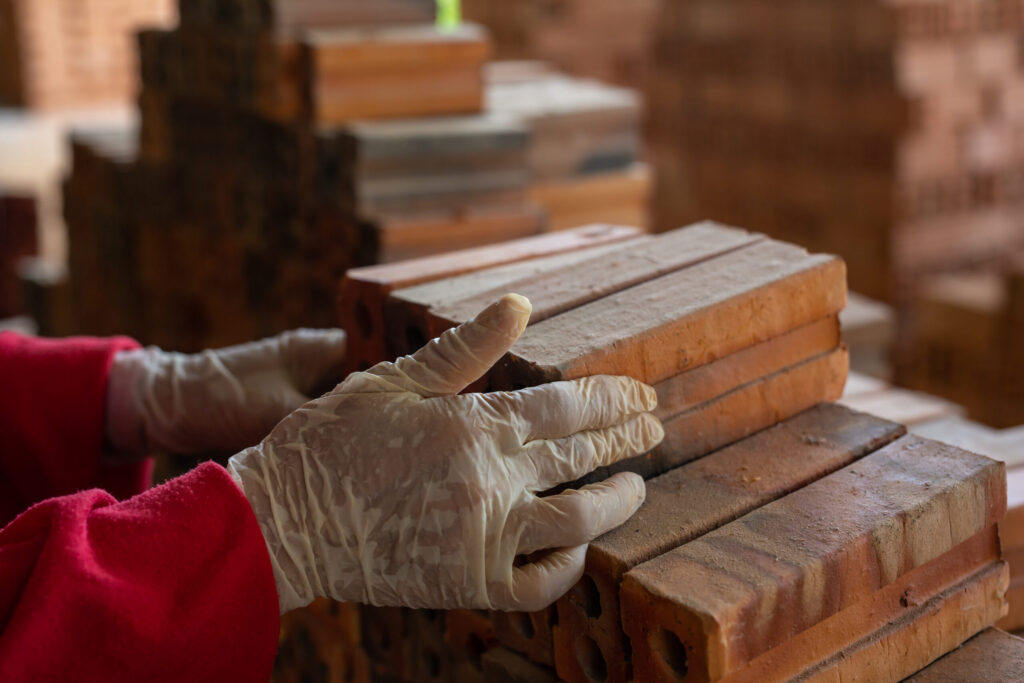
Wood science governs furniture lifespan through moisture dynamics, as timber naturally absorbs and releases atmospheric moisture until it reaches equilibrium, causing structural dimensional movement that must be controlled through proper kiln seasoning.
Wood is a hygroscopic material. It continuously exchanges moisture with the surrounding air in response to changing ambient relative humidity and temperature.
Calculating Moisture Content
The Moisture Content (MC) of wood is measured as the ratio of water mass to dry wood mass:
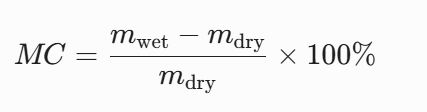
Freshly felled green lumber can exhibit an initial moisture content between 50% and over 200%. Fabricating furniture from unseasoned wood leads to severe warping and structural joint failures.
1. Fiber Saturation Point and Anisotropic Shrinkage
Wood contains moisture in two distinct forms: free water inside cell cavities (lumens) and bound water held within cell walls.
As green wood dries, free water evaporates first. The FSP is reached when all free water is gone, but cell walls remain fully saturated, typically occurring at 25% to 30% moisture content.
Drying below the FSP removes bound water from cell walls, causing wood fibers to shrink unevenly. Wood shrinks approximately 8% tangentially (along growth rings), 4% radially (across growth rings), and only 0.1% longitudinally (along the grain).
If this dimensional movement is not accounted for during seasoning and furniture design, internal stress causes wood defects, including bowing, cupping, twisting, cracking, and surface checking.
2. Equilibrium Moisture Content and Hysteresis
Wood eventually reaches Equilibrium Moisture Content (EMC), balancing its internal moisture with external air conditions. Elevated relative humidity raises the wood’s EMC, whereas higher ambient temperatures reduce it.
Wood also demonstrates hysteresis: wood reaching equilibrium by losing moisture (desorption) retains a slightly higher MC than wood reaching equilibrium by absorbing moisture (adsorption) under identical atmospheric conditions.
Target Seasoning Parameters for Tropical Climates
To prepare wood for furniture making, timber undergoes controlled seasoning:
Stacking lumber in shaded, outdoor drying yards reduces moisture levels to 20%–25% over six to nine months.
Placing timber inside insulated drying chambers allows precise regulation of temperature, humidity, and airflow. This process dries timber uniformly, relieves internal stresses, neutralizes wood-boring insects, and sets natural resins.
For indoor domestic furniture used in humid tropical regions, the target moisture content is 10% to 12%. Over-drying timber to 6% or 8% (standards intended for dry temperate climates) causes wood to swell and warp as it absorbs ambient moisture in tropical environments.
| Wood Species | Seasoning Method | Temperature / RH Parameters | Target MC | Defect Mitigation |
|---|---|---|---|---|
| White Oak | 60-day Air pre-dry, then Steam Kiln | Start at 60°C with 85% RH | 10% – 12% | Prevents checking, honeycombing, and stress cracking |
| Red Oak | Hybrid Solar/Steam Kiln with weight stacks | Cycle at 65°C with steam injections | 10% – 12% | Reduces internal cellular checking and warping |
| Spruce | High-temp Kiln under mechanical load | Moderate drying at 80°C to 90°C | 12% – 14% | Prevents spiral grain distortion and twisting |
| Douglas Fir | Low-temp pre-dry, then heat cycle | Pre-dry at 40°C for 30 days before heat | 12% – 14% | Mitigates internal honeycombing in thick dimensions |
| Acacia | Solar Kiln with moisture monitoring | Cap initial temperature at 40°C–45°C | 10% – 12% | Prevents cell collapse and casehardening |
| Sal Wood | Air pre-dry to 30% MC, then Solar Kiln | Slower moisture migration control | 12% – 14% | Prevents surface checking and internal stresses |
What Finishes and Maintenance Habits Keep Furniture Looking New?
Protective surface finishes combined with consistent daily maintenance habits ensure that high-grade furniture retains its appearance, structural alignment, and protective barrier across years of active use.
Surface finishes form an essential physical barrier against liquid spills, atmospheric humidity, UV radiation, and physical scratches:
Protective Finish Technologies
Oil-based PU provides high water resistance but dries slowly and yellows over time. Water-based PU dries quickly, emits low VOCs, and stays clear over time, requiring multiple thin coats.
Solvent-based lacquers dry rapidly to produce a smooth, high-gloss finish. However, cured lacquer has lower elasticity and can develop micro-cracks on solid wood subject to seasonal humidity movement.
Highly durable in humid conditions. In laboratory humidity testing at 90% relative humidity over 25 days, melamine retained 84% to 88% of its initial gloss (losing only 12% to 16%), whereas standard polyurethane and lacquer finishes lost up to 40% of their shine under identical conditions.
Linseed oil, Tung oil, and paste wax absorb into wood pores to highlight natural grain patterns. While easy to touch up, they offer minimal barrier protection against standing water and scratches.
Products like Berger’s Wood Protektor combine fungicides, insecticides, and UV blockers to shield interior and exterior woodwork against fungal decay and insect attacks.
Advanced coatings like Clean Armor 700 utilize photo-initiators that cure within 2 minutes under UV light spectrums. This rapid cure prevents dust particles from settling in wet finish layers, producing a clear surface with zero VOC emissions.
Crosslinking coatings that combine water-dispersible epoxy polymers with specialized curing agents. They offer strong stain and scratch resistance with VOC levels below 10 g/l.
JOAN'S MAINTENANCE GUIDE: 4 Habits for Years of Longevity
Small maintenance habits can significantly extend the life of quality furniture. Incorporate these routines into your daily care:
Clean with Soft, Non-Abrasive Cloths
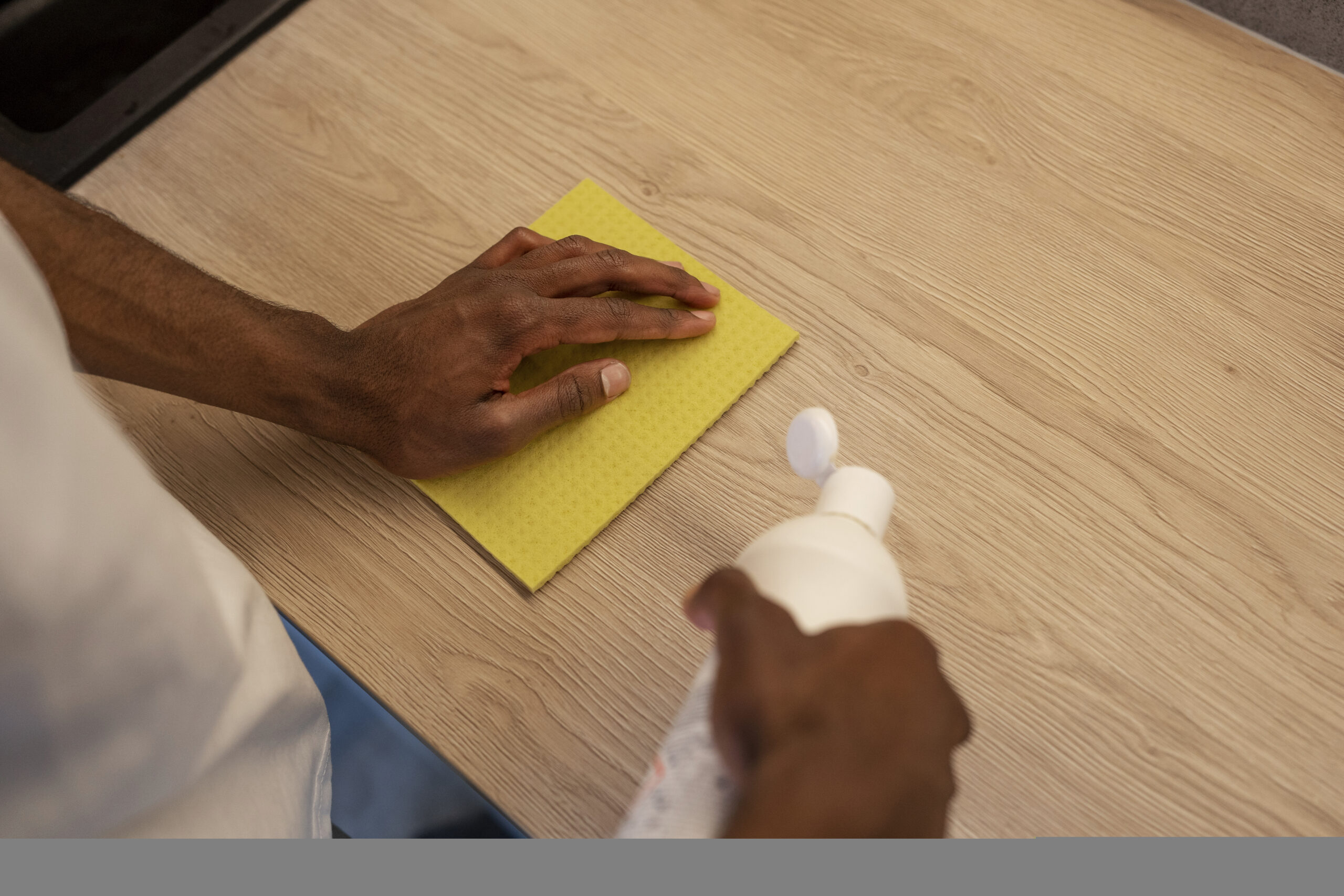
Clean furniture regularly using soft, non-abrasive cloths to remove dust without creating micro-scratches on protective topcoats.
Avoid Excessive Moisture & Wipe Spills Immediately
Prevent moisture from penetrating wood seams. Wipe up liquid spills immediately to protect the protective seal and joinery.
Respect Load Limits
Don't overload shelves or drawers beyond their intended structural capacity to avoid sagging wood cores or damaging runner mechanisms.
Inspect & Tighten Hardware Periodically
Periodically check and tighten hardware (hinges, drawer handles, structural bolts) if necessary, as normal seasonal movement can cause minor loosening over time.
How Do Anthropometric Ergonomics and Spatial Clearances Improve Everyday Living?
Anthropometric ergonomics and spatial clearances ensure that furniture aligns with human body measurements and movement patterns, maximizing comfort, preventing strain, and guaranteeing fluid room navigation. Ergonomics bridges physical health, spatial flow, and furniture construction.
Popliteal Circulation Factor
Popliteal height is the distance from the floor to the crease behind the knee. High seats compress the popliteal artery. Premium seating accounts for a cushion compression factor of 1 to 1.5 inches to keep feet flat on the floor.
Dining Heights & Seating
Standard dining tables range from 28 to 31 inches (71 to 79 cm) high, paired with seat heights of 17 to 20 inches (43 to 51 cm). This maintains an eating differential of 9 to 12 inches (23 to 30 cm) so forearms rest naturally without elevating shoulders.
Office Desk & Counter Proportions
Desks sit at 72 to 75 cm (28.3 to 29.5 in), paired with 40 to 55 cm adjustable seating and 70 to 80 cm depths for a 50 to 70 cm monitor distance. Reception counters feature an upper tier at 110 to 115 cm (43 to 45 in) for standing transactions.
Spatial Clearances & Accessibility
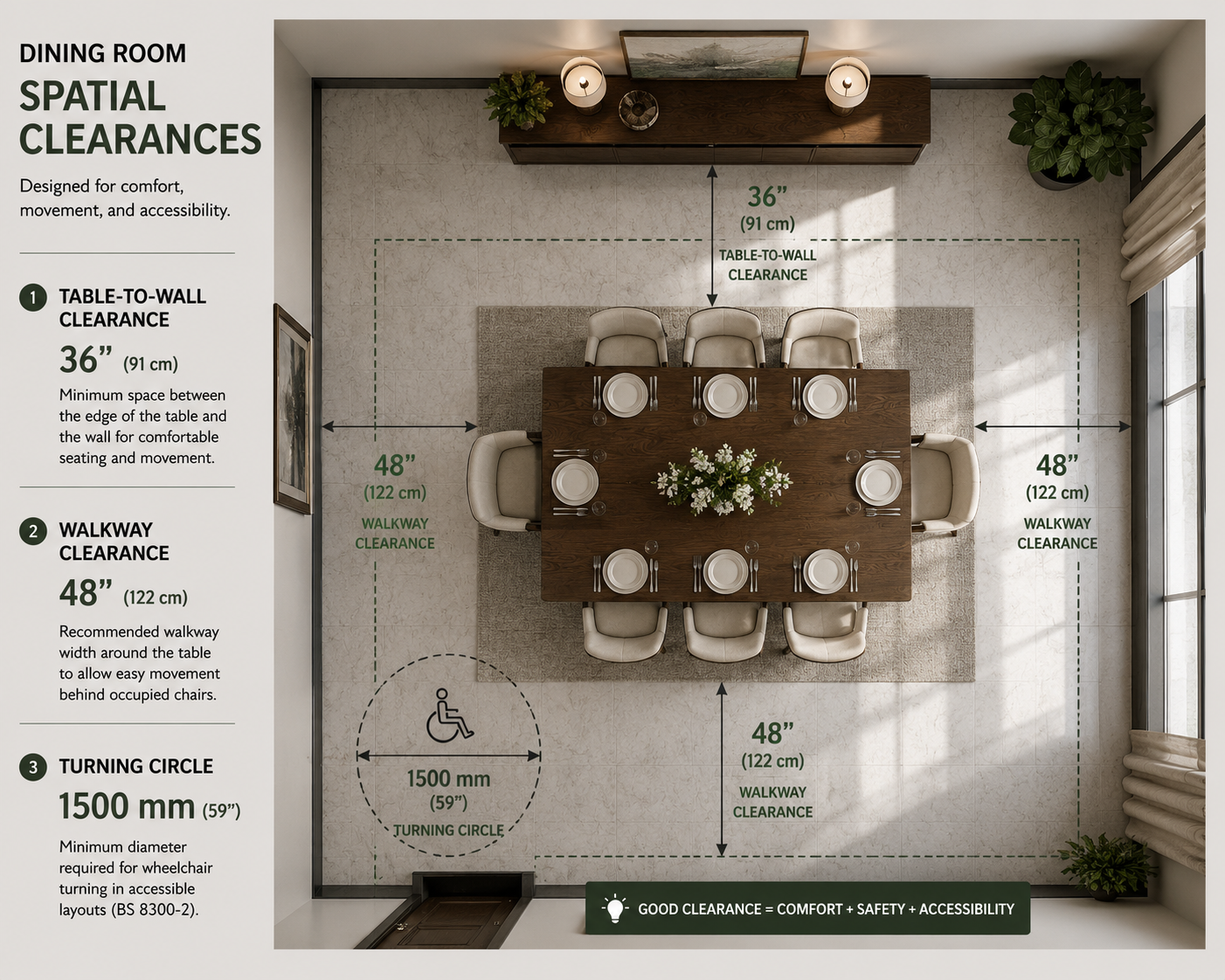
Tables require 36 inches (91 cm) of clearance to walls to rise comfortably, and pathways require 42 to 48 inches (107 to 122 cm). Accessible commercial layouts require a 1500 mm turning circle (BS 8300-2).
How Can Homeowners Inspect Furniture Quality and Evaluate Quotations Before Buying?
Homeowners can inspect furniture quality and evaluate quotations before buying by examining concealed mechanical joinery under surfaces, verifying balancer sheets on laminated doors, evaluating soft-close metal hardware, inspecting raw substrate cutouts inside hinge cups, and looking beyond price to review warranties, material specifications, and past project craftsmanship.
- Inspect Joinery Underneath: Look beneath dining tables and drawer cavities for mechanical mortise-and-tenon or dovetail joints instead of visible drywall screws or hot glue.
- Verify Balancer Sheets: Single-sided laminates cause cabinet doors to bow over time. High-quality doors feature an identical backing laminate on the reverse side.
- Evaluate Hardware & Slides: Test doors and drawers to ensure adjustable metal clip-on cup hinges and soft-close under-mount slides operate smoothly.
- Inspect Raw Substrate Cutouts: Examine drilled hinge cups or sink plumbing cutouts to verify if the core is BWP plywood, HDF, or loose particleboard.
JOAN'S GUIDE: Comparing Quotations Beyond Price
When comparing quotations from different furniture companies, price is only one part of the decision. Look closely at these quality indicators:
Material Specifications: Ensure the quote specifies exact core substrates (e.g., ISO – Certified boards from non ISO – Certified boards) rather than vague terms like “engineered wood”.
Warranty Offered: Check the duration and coverage terms of the structural and hardware warranty being offered.
After-Sales Support: Understand what post-installation support is provided if adjustments are needed.
Company’s Craftsmanship & Previous Projects: Inspect past completed projects to verify joint precision, edge band seals, and finish execution.
Process Transparency: Choose a company based on how thoroughly they explain their process, seasoning standards, and timelines.
Ultimately, choose the company that gives you confidence and peace of mind, not just the cheapest quote.
JOAN'S CHECKLIST: 5 Questions Every Homeowner Should Ask
- "Can I see completed past projects and speak to previous clients if possible?"
- "How long has your company been in business?"
- "What exact materials and hardware brands do you use?"
- "What warranty do you offer on structure and moving parts?"
- "What happens if any issues arise after installation?"
Standard Quality Control Factory Tests (Tap to Expand)
Assembled furniture is placed on a flat glass or metal plate; any leg lifting more than 5mm from the surface fails inspection.
Moving components are cycled up to 20 times during on-site quality checks to ensure smooth, quiet operation without sticking or rubbing.
Dry and wet rubbing cloths are rubbed against upholstery fabrics and leathers to check for dye transfer.
Packaged cartons are subjected to drop and compression cycles (ASTM D4169 / ISTA) to verify internal padding protects the product during transit.
How Do Environmental Governance and FSC Standards Ensure Safe, Eco-Friendly Furniture?
Environmental governance and FSC standards ensure safe, eco-friendly furniture by enforcing certified sustainable timber sourcing through Chain of Custody tracking and restricting harmful indoor chemical emissions under CARB Phase 2 and TSCA Title VI.
Responsible furniture production integrates forest conservation with indoor environmental safety.
Forest Stewardship Council (FSC) Certification
Chain of Custody (CoC): CoC certification tracks wood from certified forests through timber processors to the final furniture product, ensuring responsible sourcing claims are verified.
Lesser-Known Timber Species (LKTS): To reduce pressure on over-harvested woods like Teak and Mahogany, FSC promotes Lesser-Known Timber Species. Utilizing durable, lesser-known tropical hardwoods preserves forest biodiversity while providing cost-effective material options.
Indoor Formaldehyde & VOC Regulations (CARB Phase 2 Caps)
Composite boards (MDF, particleboard, plywood) can off-gas volatile organic compounds (VOCs) like formaldehyde. Under CARB Phase 2 / EPA TSCA Title VI, strict caps are enforced:
Hardwood Plywood (Veneer Core): Max 0.05 ppm (parts per million)
Particleboard: Max 0.09 ppm
Medium-Density Fiberboard (MDF): Max 0.11 ppm
Thin MDF (≤ 8 mm): Max 0.13 ppm
Under LEED EQ 4.2 standards, on-site wood varnishes are capped at 350 g/l VOCs and lacquers at 550 g/l VOCs.
Why Joanswood Creation Represents the Standard of Structural Integrity in West Africa
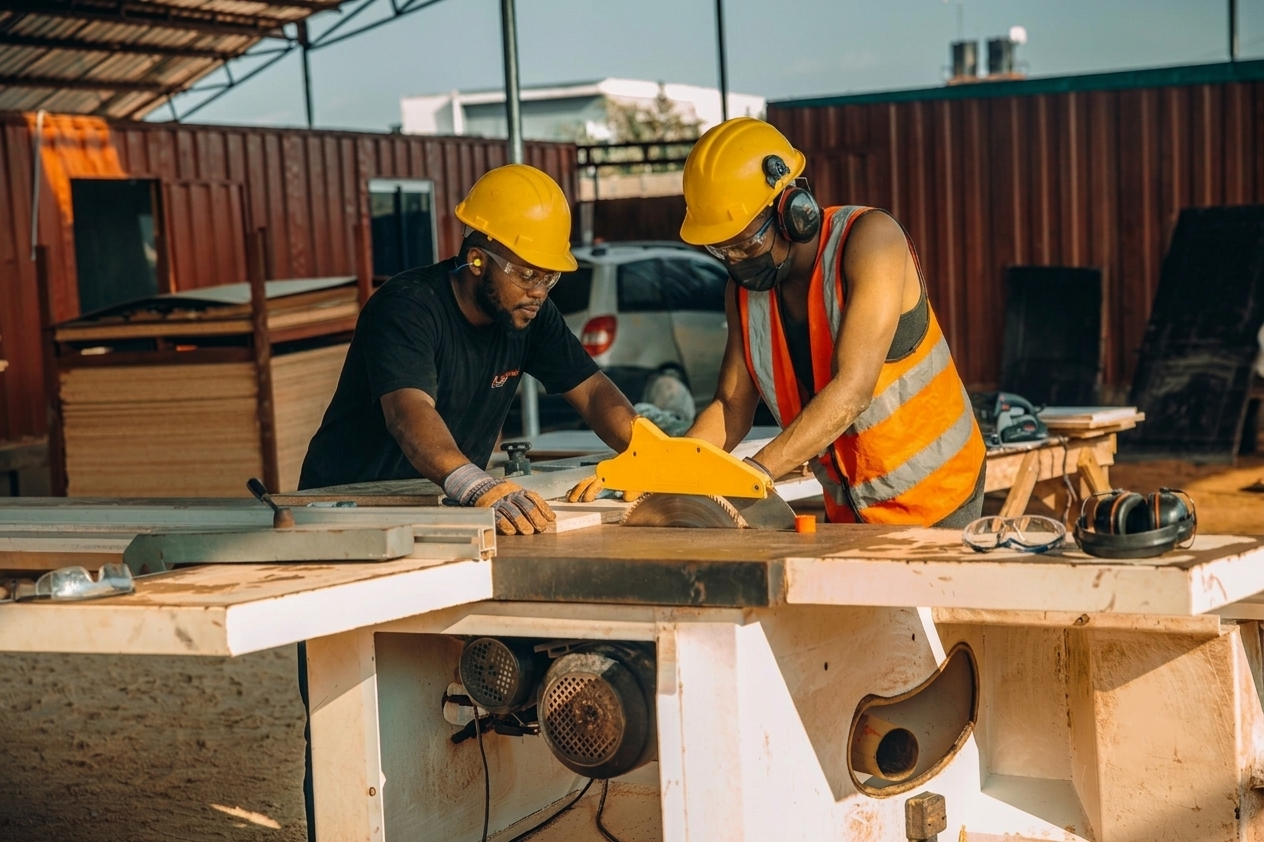
At Joanswood Creation, we often see how relative humidity levels in coastal areas like Lagos and Port Harcourt (ranging between 75% and 98%) combined with dry Harmattan seasons in Abuja cause imported flat-pack items to swell, split, and warp.
Our experience designing furniture for West African homes shows that moisture vectors from concrete walls, known as rising damp, degrade standard particleboard cabinetry quickly.
To overcome these challenges, Joanswood Creation custom-engineers each piece using moisture-resistant substrates. We use ISO-certified European boards (MFC, MDF) and phenolic resin-bonded BWP plywood for built-in casework, preventing moisture absorption and structural decay. For edge bandings, hot-pressed applications prevent peeling in typical indoor temperatures of 30°C to 38°C.
For primary load-bearing frames, we utilize local hardwoods like Iroko to deliver natural rot and insect resistance. Before production begins, our team conducts on-site space audits and creates detailed 3D digital visualization models.
Ready to Invest in Furniture Built to Last a Lifetime?
Don’t settle for temporary flat-pack furniture that warps, bows, and peels under seasonal climate shifts. Whether you’re furnishing a private residence, executive office, or commercial development, Joanswood Creation combines advanced materials science, precision joinery, and 3D space audits to deliver custom solutions tailored to your space.
Frequently Asked Questions
Custom solid wood furniture utilizes dense hardwoods, interlocking joinery (like mortise-and-tenon or dovetails), and chemical barrier coatings. Flat-pack furniture relies on low-density particleboard, paper veneers, and temporary metal cam locks that weaken quickly under physical stress and humidity.
Kiln drying reduces wood moisture content to a stable target of 10% to 12%. This prevents timber from swelling during humid coastal rainy seasons or shrinking and cracking during dry Harmattan periods.
Clean furniture regularly using soft, non-abrasive cloths, avoid excessive moisture, wipe spills immediately, do not overload shelves or drawers beyond capacity, and periodically check and tighten hardware if necessary.
Look at the specific quality of materials specified, the warranty offered, after-sales support, craftsmanship, previous completed projects, and how thoroughly the company explains its process. Choose the company that gives you confidence and peace of mind rather than simply selecting the cheapest quote.
Ask to see completed past projects, request to speak with previous clients if possible, find out how long the company has been in business, ask what specific materials and hardware they use, clarify what warranty they offer, and understand their process for addressing issues after installation.
BWP stands for Boiling Water Proof plywood. Manufactured using phenol-formaldehyde resin adhesives, it resists delamination when exposed to water, heat, or rising damp from concrete walls.
A mortise and tenon joint inserts a solid wood tenon into a matching mortise cavity, distributing physical loads across wood fibers. Load testing demonstrates that mortise and tenon joints outperform standard dowel joints by an average of 25% in load capacity.
The recommended target moisture content for interior furniture in humid tropical climates is 10% to 12%. Over-drying wood to 6% or 8% causes it to absorb moisture and swell in tropical humidity.
A laminated panel will bow if laminate is applied to only one side. High-quality construction requires a balancing sheet or backing laminate on the reverse side to distribute surface tension evenly.
In laboratory tests at 90% relative humidity over 25 days, melamine finishes retained 84% to 88% of their gloss (losing only 12% to 16%), outperforming polyurethane and lacquer coatings which lost up to 40% of their shine.
CARB Phase 2 regulations set strict limits on carcinogenic formaldehyde emissions from composite wood boards (e.g., 0.05 ppm for hardwood plywood and 0.11 ppm for MDF). Meeting these standards protects indoor air quality.
Joanswood Creation uses phenolic resin-bonded BWP plywood for built-in carcasses, backed by sealed membranes and elevated base supports that block moisture migration from damp concrete walls.